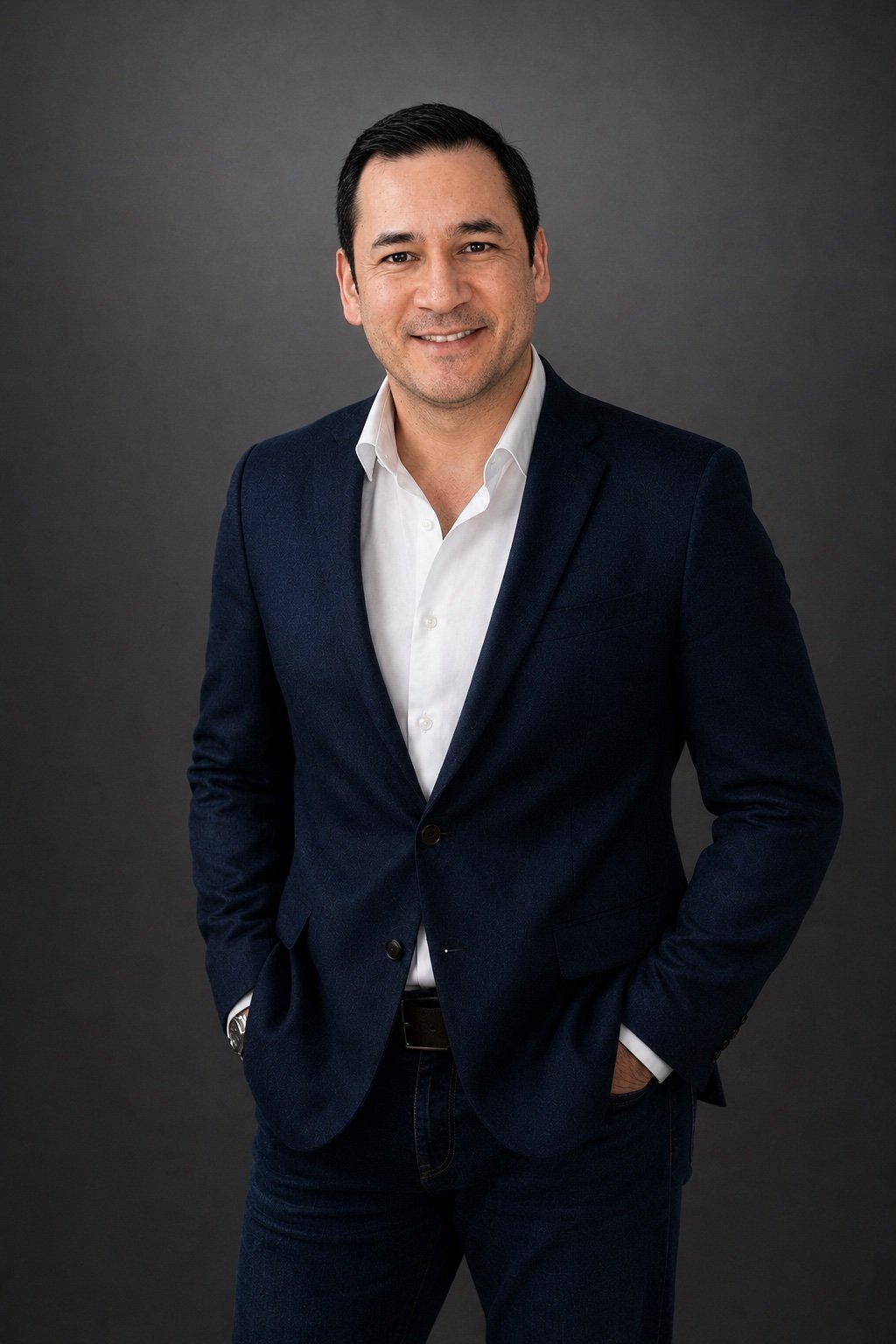
Tavis Scholz — Fractional Operating Partner

Build the operating system behind your next stage of growth.

Fractional operating leadership for franchise brands, multi-unit businesses, and growth-stage companies that need more than advice.

I help leadership teams build the structure, systems, teams, and execution discipline required to scale — and I stay through implementation.

Tavis Scholz, fractional operating partner
8X locations scaled nationally
21 → 173
point-of-sale growth
$5.7M → $38.5M
site-level projects delivered
130+
franchisees closed, from a standing start
0 → 3

The Situation

Growth creates complexity faster than most teams can absorb it.

Most companies don't stall because the strategy is wrong. They stall trying to scale on structure built for a smaller company — the founder carrying too much, decisions made reactively, every new location harder than the last.

Nothing is broken enough to stop growth — yet. That's usually when I get the call.

The situations I'm typically brought into:

  • Growth has outpaced the current organization
  • Executive-level operating support is needed — but not another permanent executive
  • A franchise program exists on paper but lacks a working development engine
  • Locations are expanding without consistent economics or execution
  • Ownership needs an operator who will stay through implementation

How I Help

Four ways to put senior operating capacity to work.

These are operating engagements, not advisory sessions. Each one ends with something built — a system, a team, a process, a plan in motion.

01

Fractional Operating Partner

Senior operating capacity inside your leadership team — translating strategy into plans, cadences, and accountability — without adding a permanent executive.

  • Operating plan with owners, timelines, and a working review cadence
  • KPIs, scorecards, and dashboards leadership actually uses
  • Clear organizational structure and decision rights

Outcome

A leadership team that executes without the founder in every decision.

02

Franchise Development & Infrastructure

The development engine behind a franchise offering — strategy, economics, sales process, and operating standards — from someone who has taken a system from zero to its first closed franchisees. Business support in coordination with your counsel, not legal advice.

  • Franchise sales process, territory strategy, and candidate qualification
  • FDD and Item 19 business support alongside qualified counsel
  • Operations manuals, onboarding systems, and unit-level economics

Outcome

A franchise program that can recruit, close, onboard, and support — not just a document set.

03

Multi-Unit Growth & Performance

The performance stack multi-location businesses run on: operating model, field leadership, sales planning, incentives, and the discipline to know which units to invest in, fix, or exit.

  • Daily sales-plan tracking and performance management
  • Incentive compensation from associate to district level
  • Unit evaluation, triage, and portfolio segmentation

Outcome

Every location on a plan, and a portfolio you can steer instead of chase.

04

Real Estate & Site Development

A system for expansion and occupancy decisions — market strategy, site selection, lease discipline, and the playbooks that turn a signed lease into a trading location on schedule.

  • Market plans, site-selection models, and pro formas
  • Lease negotiation support and occupancy-cost discipline
  • Buildout and opening playbooks — openings, relocations, closures

Outcome

Location decisions made against a model, delivered on time and at standard.

Selected Results

Systems that held up under real growth.

Three builds from the same national retailer. No composite clients, no invented testimonials.

Built a franchise system from zero

150 inquiries · 3 deals closed · 10 months

A national corporate retailer wanted to franchise and had nothing behind the ambition — no FDD, no territory model, no sales process. I built the entire development function, from US and Canadian FDDs with counsel to a 614-market territory model and an AI-augmented sales process one person could run. The first three franchisees closed in under a year, at roughly twice the benchmark rate for new franchisors.

Scaled — then rationalized — a national portfolio

173 locations · $38.5M sales · 94 retained

I helped grow a 21-store, $5.7M chain into a 173-store, $38.5M national footprint — then led the harder work of rationalizing it. A 154-store evaluation system drove a 94-keep / 48-close decision, occupancy costs came into the target band, and same-store sales returned to growth.

Built a repeatable development engine

130 projects · 5-day retrofits · 10-person team

The development department had zero staff and a transformation ahead of it. I built a 10-person organization and the cross-functional playbooks behind roughly 130 site projects — 21 openings, 100+ wind-downs, and second-generation retrofits standardized to a five-day cycle with near-zero build errors.

Ways of Working

Three ways to engage.

01

Fractional Leadership

Ongoing executive operating capacity for a defined number of days per month — I join the leadership team, own an agenda, and run it.

02

Focused Build

A defined project with a defined finish line: a franchise sales process, a multi-unit operating system, a market strategy.

03

Assessment & Action Plan

A diagnostic review followed by a prioritized 30-, 60-, or 90-day operating plan.

Engagements are scoped around the business problem, the level of involvement required, and the outcome you need — not a rate card.

About

Strategic enough for the boardroom. Practical enough to build what it decides.

I'm an operator who came up the long way: six leadership roles in twelve years, store manager to vice president, inside a national specialty retailer as it scaled from 21 locations to 173. I ran sales, operations, training, real estate, construction, and franchise development — usually building the department before running it.

That range is the point. Most scaling problems live between functions — where real estate meets operations, where sales planning meets labor cost, where a franchise promise meets what stores actually do. I've owned every side of those seams, and I build with modern tools — including AI where it genuinely compresses work — without making the technology the story.

The full operator track

Who I work with

  • Emerging and rebuilding franchisors
  • Multi-unit retailers, restaurants, and service businesses
  • Founder-led companies entering a more complex stage of growth
  • Private-equity-backed businesses that need operating depth
  • Companies preparing for expansion, acquisition, or ownership transition
  • Franchisees preparing for multi-unit growth

In brief

  • MBA — Carson College of Business, Washington State University
  • BBA, cum laude — Entrepreneurship and International Business
  • Former franchisee
  • Former adjunct lecturer of entrepreneurship
  • Native/bilingual English and German
  • Based in Tennessee · working across North America
Download executive profile (PDF)

Next Step

You do not need another deck. You need the operating structure to make the plan work.

If you're a founder, investor, or executive team working through a constraint you can name — or one you can't quite yet — the first conversation is simple: what's breaking, what it's costing, and what would have to be built to fix it.

Based in
Sevierville, Tennessee · Working with companies across North America